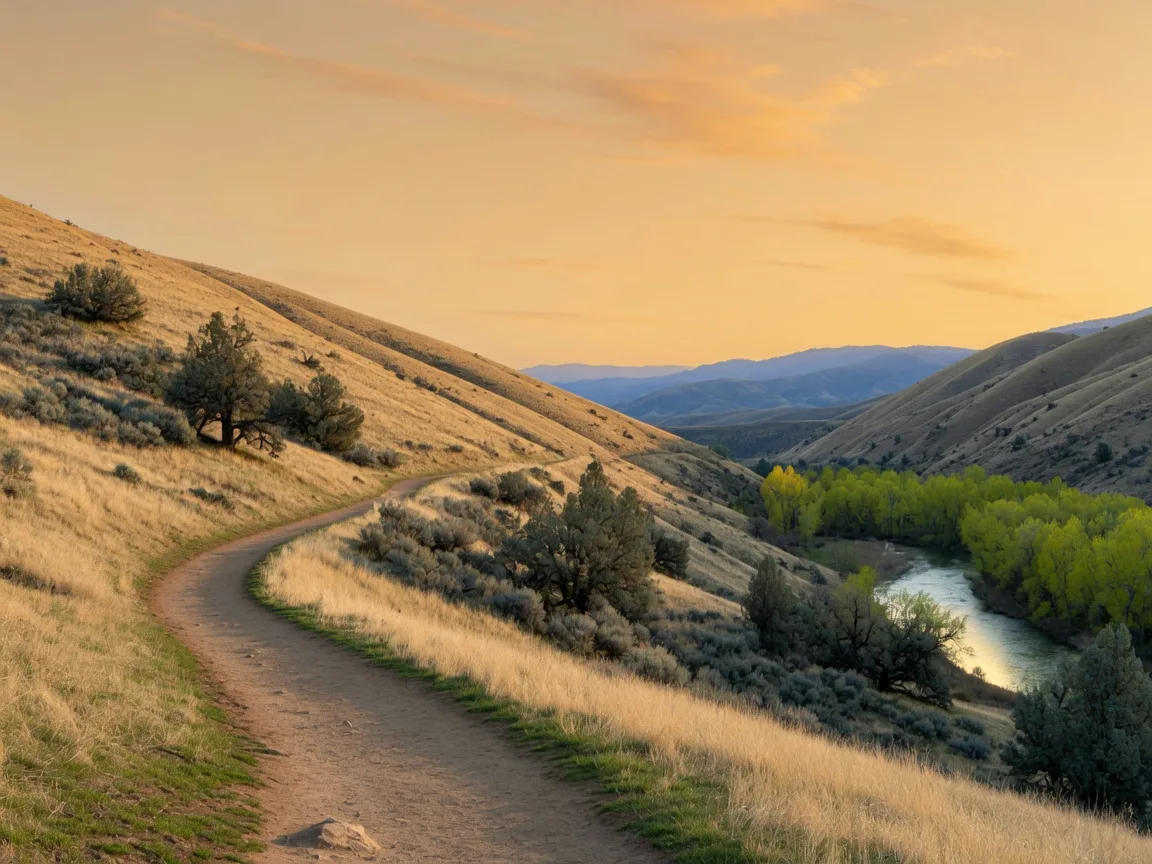
The biggest surprise for most newcomers is not the cold, it is the sun. The Treasure Valley is a semi-arid high desert with four real seasons, and each one has its own character.
Summer: hot, dry, and long
July highs average in the low 90s, and it stays bright and dry. Evenings cool off, the foothills turn golden, and the Boise River becomes the town's swimming pool. This is when you learn why the Greenbelt matters.
Fall: the good one
Crisp mornings, golden cottonwoods, and a long run of clear days before winter. Most locals will tell you fall is the season they moved for.
Winter: cold and sunny
January lows average around 24 degrees, and Boise gets roughly 18 inches of snow a winter, a fraction of what a mountain town sees. The payoff is that the sun keeps showing up, and Bogus Basin is about 45 minutes away.
Spring: quick and green
The valley greens up fast, the foothills carpet in wildflowers, and before you know it, summer is back. The trade-offs to know are the winter inversions and the occasional summer wildfire smoke, which are real but manageable parts of valley life.
Weather numbers follow BestPlaces climate data. Ask us how any given town's microclimate differs from downtown Boise, because it genuinely does.
Verify before you rely
Figures in this article are drawn from the official and third-party sources noted on our guide pages and change over time. Confirm current data with the agencies cited or ask our team for the latest.
Paul Knighton & Tina DeBoer
MORE Realty · Treasure Valley, Idaho